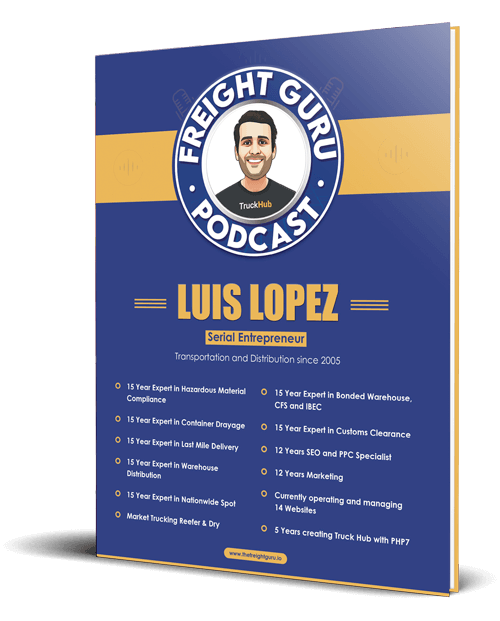
By Luis Lopez, AI transportation consultant, CEO of Go Hub.io Holdings Corp and subsidiaries, and host of the Freight Guru Podcast
Flatbed freight is the part of trucking where the cargo is out in the open. There are no walls and no roof, which makes flatbeds the right tool for steel, lumber, machinery, building materials and other loads that will not fit through a dock door. It also means securement, weather protection and permits matter more than they do with a box trailer. Here is how it works and what shippers should know.
What flatbed freight is
A flatbed trailer is a flat deck with no sides or cover. Freight is loaded from the top or the side, often by forklift or crane, and then secured to the deck. That openness is the advantage: you can load tall, wide or awkwardly shaped cargo that a van trailer cannot take.
Common flatbed cargo includes:
- Construction materials and building supplies
- Steel, pipe and other metal products
- Machinery and equipment
- Large crates or oversized items
- Palletized goods that need top or side loading
Variations exist, such as step-deck and other drop-deck configurations, which give more height clearance for taller cargo. Ask your carrier which equipment fits your freight rather than assuming.
Securement: the rules that apply
Cargo on a flatbed has to be secured so it cannot shift, fall off or become a hazard to other drivers. In the United States, this is governed by the federal cargo securement rules in 49 CFR Part 393. Those rules set the standards for how cargo must be restrained and what securement equipment must be capable of.
I am not going to quote specific numbers for tie-downs or ratings here, because the requirements depend on the cargo type, its weight and its shape. What I can tell you is how this works in practice:
- The driver is responsible for the load being properly secured before moving, and carriers train for it.
- The shipper’s job is to provide cargo that can be secured: stable, with solid points of contact, and accurately described.
- Tell the carrier about anything unusual, such as a high center of gravity, loose components, sharp edges or fragile surfaces, before the driver shows up.
- If you have manufacturer instructions for lifting or tying down the item, give them to the driver.
If you have specific questions about securing a particular load, check the regulation itself and ask your carrier. Do not rely on rules of thumb.
Tarping
Because the freight is exposed, weather protection is a separate decision. Some cargo, like steel or lumber, may be fine uncovered or may need a tarp to keep it clean and dry. Other cargo has to stay dry or protected from road debris.
Points to settle when you book:
- Does the cargo need to be covered? Say so up front.
- Who supplies and applies the tarp? This is often a separate charge from the line haul. Confirm it in the quote.
- What type of covering? Some loads need more than a basic tarp, and some cannot be tarped in the usual way.
Do not assume tarping is included. Tarp requirements and who pays for them are a common source of quote disputes. Read the fee terms the same way you would with any other accessorial, and see our five questions to ask before hiring a freight carrier for what to ask.
Oversize and overweight loads
Some cargo is too wide, too tall, too long or too heavy to travel on public roads without special authorization. These loads need state permits, and the requirements vary by state. Routing, travel times, escort vehicles, signage and other conditions can differ from one state to the next.
That has a few practical consequences for shippers:
- Tell the carrier the exact dimensions and weight early. Estimates are not good enough for permit work.
- Allow lead time. Permitting and route planning take time, and a rushed pickup may not be possible.
- Expect restrictions. Some permits limit when and where the load can move.
- Check with each state’s permit office or ask your carrier which jurisdictions are involved. I would not rely on a general summary for a specific move.
Weight limits also matter for containers. If you are moving heavy cargo in an ocean container rather than on a flatbed, see our article on Florida overweight container permits and triaxle chassis limits.
What drives the cost and the complexity
Flatbed pricing depends on more than distance. Factors worth discussing with your carrier include:
- The size and weight of the load
- Whether special equipment is needed
- Tarping and other securement supplies
- Permits and escorts for oversize freight
- Loading and unloading method, and time at each end
- Fuel, which is usually handled through a surcharge. See fuel surcharge in trucking explained.
Get the pricing in writing and confirm what each line covers. A rate confirmation should spell out the terms. Our guide on what a rate confirmation is explains what to look for.
How shippers should prepare
- Know your freight. Accurate weight, dimensions, piece count and description.
- Tell the carrier how it loads. Forklift, crane, top load or side load, and whether your site has the equipment.
- Be clear on tarping. Needed or not, and who pays.
- Flag oversize or overweight early. So permits and routing can be handled.
- Provide a safe, accessible loading area. Flat, clear, with room for the truck to maneuver.
- Have lifting and handling instructions available for the driver, if the cargo has them.
- Document the load. Take photos before the truck leaves and note condition on the paperwork.
The takeaway
Flatbed is the right choice when your freight does not fit anywhere else, but it asks more of both shipper and carrier. Securement follows federal rules, tarping is a decision you have to make and pay attention to, and oversize or overweight moves bring state-by-state permit requirements. Give your carrier accurate information early, get the terms in writing, and let the driver do their job securing the load.
For more on freight and logistics, subscribe to the Freight Guru Podcast.
About the author: Luis Lopez is a Miami-based AI transportation consultant and logistics entrepreneur, the CEO of Go Hub.io Holdings Corp and subsidiaries, and host of the Freight Guru Podcast.