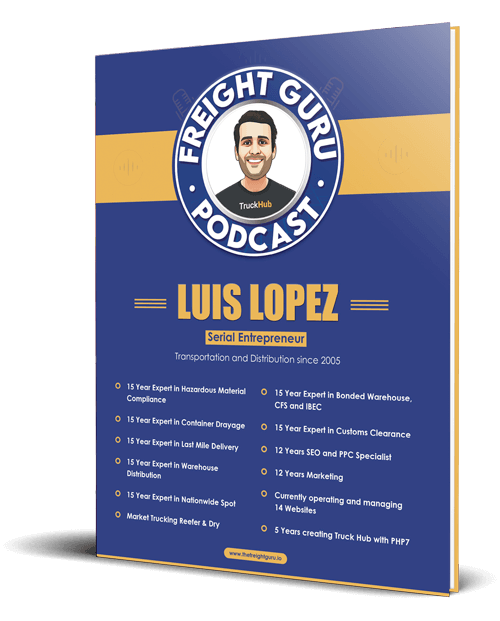
By Luis Lopez, CEO of Go Hub.io Holdings Corp and subsidiaries, and host of the Freight Guru Podcast
Drayage is the most paperwork-heavy mile in trucking. One container can involve a steamship line, a terminal, a chassis provider, a customs broker, a trucker and a warehouse, each with its own portal and its own clock. That is exactly the kind of work artificial intelligence is good at: reading, matching, watching deadlines and flagging exceptions.
Here are the ten places I see AI making a real difference in drayage, in the order I think they matter to an operator or an importer.
1. Tracking Free Time and Last Free Day
Demurrage and per diem are deadline problems. Software that pulls container availability, holds and last free day from terminal and carrier sources, then ranks containers by how close they are to charges, prevents more cost than any other tool on this list. If you only automate one thing, automate this. For the basics, see demurrage vs. detention.
2. Terminal Appointment Booking
Appointment slots open and disappear quickly. Automated tools can watch for openings and book or suggest slots that fit a driver’s day, instead of a dispatcher refreshing a portal. The gain is fewer wasted trips and more turns per truck.
3. Reading Delivery Orders and Shipping Documents
Delivery orders arrive as PDFs, scans and email text in every format imaginable. Modern document AI can extract the container number, booking, weights, consignee and dates and create the work order without retyping. A person still needs to review exceptions, but the hours saved on data entry are real.
4. Dispatch Planning and Dual Transactions
The most profitable drayage move is one where the driver drops an empty and picks up a load on the same trip. Optimization software can look across all open orders, appointments and driver hours to find those matches. A good dispatcher does this in their head for ten trucks. Software helps when it is fifty.
5. Predicting Terminal Congestion and Turn Times
Using gate transaction history, vessel schedules and GPS data, models can estimate how long a terminal visit will take at a given hour. That lets dispatch promise realistic delivery windows and decide which terminal to hit first.
6. Auditing Invoices and Accessorials
Drayage invoices carry chassis, pre-pull, storage, wait time and fuel lines that are easy to bill wrong and hard to check by hand. AI can compare each charge against the rate agreement, gate timestamps and GPS records and flag what does not match. I covered the manual version in how to audit a drayage invoice.
7. Customer Updates Without the Phone Calls
A large share of a dispatcher’s day is answering “where is my container?” AI assistants connected to the dispatch system can answer status questions by email, text or chat, and send proactive alerts when a hold clears or a delivery is completed. The operation gets its dispatchers back.
8. Chassis Management
Knowing which chassis is under which container, whose pool it belongs to and how many days it has been out is tedious and expensive to get wrong. Matching gate records to billing automatically catches split charges and days you should not be paying for. More on that in chassis fees, splits and pools explained.
9. Quoting
A drayage quote depends on the port, the distance, container size and weight, chassis, permits and expected wait time. AI-assisted quoting can assemble those pieces from past moves and current conditions and return a rate in minutes. The rate still needs an owner who understands the lane.
10. Safety and Compliance Monitoring
Camera and telematics systems now use AI to flag following distance, distraction and hours-of-service risk. For overweight containers, software can check declared weights against permit and axle limits before the truck leaves the terminal.
What AI Still Cannot Do in Drayage
- Fix bad data. If terminal information is late or wrong, the best model is late or wrong too.
- Replace relationships. A terminal contact who answers the phone is still worth more than a dashboard.
- Take responsibility. Someone has to own the decision when a container is about to go into demurrage. Software can warn. It cannot be accountable.
Where to Start
Start where the money leaks: free-time tracking and invoice auditing. Both pay for themselves quickly and neither requires changing how drivers work. Add document reading next, then planning. When you evaluate any tool, ask what data it connects to, how it handles exceptions, and what happens when it is wrong.
For more on freight technology and port operations, subscribe to the Freight Guru Podcast.
About the author: Luis Lopez is a Miami-based logistics entrepreneur, the CEO of Go Hub.io Holdings Corp and subsidiaries, and host of the Freight Guru Podcast.