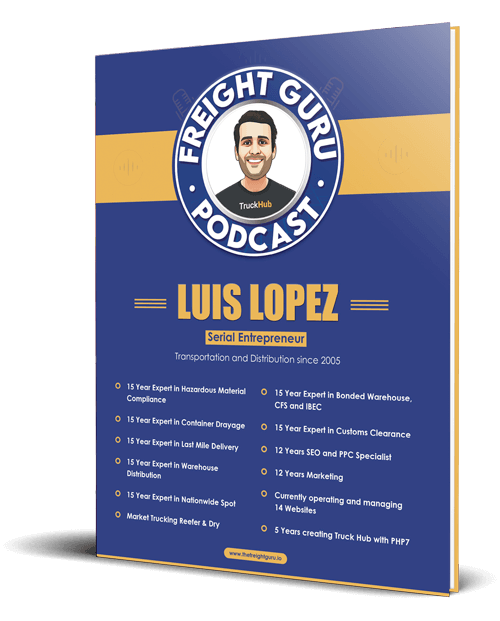
By Luis Lopez, AI transportation consultant, CEO of Go Hub.io Holdings Corp and subsidiaries, and host of the Freight Guru Podcast
A truck only earns money when it is moving. Yet a large part of every driver’s week is spent sitting at a dock waiting to be loaded or unloaded. That waiting is called detention, and it is one of the most expensive inefficiencies in freight. Everybody pays for it, including the shippers who cause it.
This is truck detention at a shipper or receiver. Container detention and demurrage at the ports are a different subject, which I covered in demurrage vs. detention.
What Counts as Detention
Most rate agreements allow a period of free time at each stop, commonly two hours, measured from the appointment time or the driver’s arrival. Time beyond that is detention, billed by the hour if the agreement provides for it.
There is no federal rule that requires a shipper to pay detention. It is a matter of contract. If the rate confirmation is silent, the carrier usually has nothing to bill. That is why the terms need to be in writing before the load moves. See what a rate confirmation is.
Why It Happens
- Overbooked docks. More appointments than doors or labor can handle.
- Freight not ready. The truck arrives on time and the order is still being picked or staged.
- First-come, first-served receiving. No appointment means no control over the line.
- Paperwork problems. Missing purchase order numbers, wrong pickup numbers, or documents that do not match the freight.
- Labor and equipment shortages. Not enough lift operators, or lumper crews that start late.
- Early or late trucks. A missed appointment often sends the driver to the back of the line.
- Slow check-in. Guard shacks, paper logs and waiting for a door assignment.
What It Costs
Drivers
Most drivers are paid by the mile. Hours at a dock are often unpaid or paid at a low rate. Waiting also burns the driver’s available hours: the on-duty clock keeps running, so a long delay in the morning can mean the driver runs out of time before reaching the next stop.
Carriers
A truck that waits four hours may lose its next load. Detention pay, when it is collected at all, rarely covers the revenue the truck would have earned moving. Small carriers feel this most, because one missed reload is a large share of the week.
Shippers and receivers
Facilities known for long waits pay for it in higher rates and fewer carriers willing to take the freight, especially when capacity is tight. Detention invoices, service failures and strained carrier relationships add up to more than the cost of fixing the dock.
Safety
Drivers who lose hours at a dock are under pressure to make up time. Federal safety researchers have studied the connection between long dwell times and crash risk. Less waiting is a safety improvement, not only a cost saving.
How Shippers and Receivers Can Reduce It
- Schedule to real capacity. Set appointments based on how many trucks each door and shift can actually turn.
- Stage freight before the truck arrives. Pre-pick and pre-stage outbound orders.
- Measure dwell time by facility and shift. You cannot fix what you do not time-stamp.
- Offer drop trailers for regular lanes so the driver swaps and leaves. I explained how that works in drop and hook trucking.
- Speed up check-in. Send pickup numbers in advance and let drivers check in by phone.
- Extend dock hours or add flexible appointment windows on heavy days.
- Tell the carrier early when the dock is running behind, so dispatch can adjust.
How Carriers and Brokers Can Protect Themselves
- Get the terms in writing: free time, hourly rate, any cap, and what proof is required.
- Arrive on time and document it. In and out times on the bill of lading, signed by the facility, plus GPS or ELD records.
- Notify the broker or shipper as soon as free time is about to run out. Many agreements require notice before detention can be billed.
- Bill it promptly with the documentation attached.
- Track facilities. Keep a record of which locations detain trucks and price that freight accordingly, or decline it.
Where Technology Helps
Dock scheduling software, GPS geofences that time-stamp arrival and departure automatically, and predictive tools that estimate how long each load will take are all reducing detention where they are used. The data also settles arguments. When both sides can see the same time stamps, a detention claim is a matter of record instead of a dispute.
The Bottom Line
Detention is a scheduling and communication problem more than anything else. Facilities that plan their docks honestly, stage freight ahead of time and treat a driver’s time as valuable get better rates and better service. Carriers that document everything get paid for the time they do lose.
For the other charges that show up after a load, see LTL accessorial charges explained.
For more practical guidance for shippers, carriers and brokers, subscribe to the Freight Guru Podcast.
About the author: Luis Lopez is a Miami-based AI transportation consultant and logistics entrepreneur, the CEO of Go Hub.io Holdings Corp and subsidiaries, and host of the Freight Guru Podcast.