By Luis Lopez, AI transportation consultant, CEO of Go Hub.io Holdings Corp and subsidiaries, and host of the Freight Guru Podcast
Quoting freight used to mean phone calls, email chains, and a rate sheet that was out of date by Friday. AI freight quoting tools promise to replace that with an instant price. That is attractive, and for some freight it works well. For other freight, an instant number is a trap.
I have spent years in South Florida freight, quoting and pricing drayage, LTL, truckload, warehousing, and hazmat. Here is how AI quoting actually works, where it helps, and what shippers and brokers should watch.
What an AI quote engine does
An AI quoting tool takes the details of a shipment and returns a price or a range. The inputs usually include origin, destination, weight, dimensions, equipment type, pickup date, and any special requirements. The system compares that to a body of information, which might include:
- The company’s own past quotes and booked rates
- Contract rates and published tariffs
- Recent market conditions for similar lanes
- Rules for accessorial charges and fuel surcharges
Machine learning adds the ability to spot patterns, such as how rates on a lane move by season or how a certain commodity tends to price. The output can be a single number, a range, or a recommendation on how much margin to add.
Some tools also automate the intake side. They read an emailed request, pull out the shipment details, and draft a response. That is a separate function from pricing, and it carries its own risks if the extraction is wrong.
Where AI quoting helps
Speed and volume
Routine, repeatable lanes can be priced in seconds. For a broker or carrier handling many requests, that frees staff for complex work.
Consistency
A system applies the same logic every time. Two people on the same team are less likely to quote the same shipment two different ways.
Better use of history
Most companies have years of quote and booking data that nobody has time to analyze. A tool can reveal which lanes you win, which you lose, and where you may be underpricing.
Faster response for customers
Shippers often go with whoever answers first. A fast, reasonable quote can win the conversation.
Where it goes wrong
Thin or messy data
A model trained on a small number of quotes, or on records with inconsistent entries, will produce shaky prices. This is the same data quality problem that affects every AI tool in freight. See what AI cannot do in freight data quality.
Missing accessorials
The base rate is often the easy part. Detention, liftgate, residential delivery, redelivery, storage, chassis charges, and special handling are where quotes go wrong. If the tool does not capture the real conditions at the pickup and delivery, the final bill will not match the quote, and somebody will be unhappy.
Special freight
Hazmat, oversized, temperature-controlled, high-value, and time-critical freight need human judgment. Compliance requirements, equipment availability, and carrier restrictions do not fit neatly into a model. Treat any instant quote on these loads as a starting point at best.
Market swings
Rates can shift quickly. A model that leans on last month’s data may underprice a tight market or overprice a soft one.
Unclear assumptions
An instant price that does not state what it includes can lead to disputes. Does it assume dock-to-dock service? A standard pickup window? No waiting time? If the assumptions are hidden, so is the risk.
What shippers should know
- An instant quote is not always a firm rate. Read the terms. Find out whether the number is guaranteed, an estimate, or subject to change after review.
- Understand what is included. Ask which accessorials and surcharges are built in and which can be added later.
- Describe your freight accurately. Wrong weight, dimensions, or freight class create corrections and delays regardless of how smart the quote tool is.
- Compare more than the headline price. Service quality, transit reliability, and claims handling matter.
If you want to understand what actually moves a price, read what affects freight quotes for LTL and truckload. And since many shippers must choose between locked pricing and market pricing, contract vs. spot freight rates is worth reading alongside this one.
What brokers and carriers should know
- Keep a human in the loop for margin decisions. A tool can suggest, but you own the commitment. A bad quote you accepted is still your cost.
- Audit the results. Compare quoted prices to what the freight actually cost to move. If the gap is consistent, the model needs adjustment.
- Track win and loss patterns. Data on quotes you lost can be as useful as data on quotes you won.
- Be careful with automated customer replies. If the tool drafts or sends responses, review the first batches closely for errors in extracted details.
- Keep your own pricing rules. Minimums, lane-specific adjustments, and customer agreements should be set by you, not guessed by the software.
Questions to ask a vendor
- What data does the model use, and is any of it mine?
- How does it handle accessorials and special freight?
- Can I see how a price was built, or is it a black box?
- How quickly does it adjust to market changes?
- What happens to my quote data, and who else can benefit from it?
- Can I override the output, and is that logged?
For a broader approach to vendor selection, see how to evaluate an AI vendor for trucking and logistics.
The bottom line
AI freight quoting is strongest on repeatable lanes with clean history and weakest on unusual freight, volatile markets, and anything with complicated accessorials. It makes quoting faster, but it does not remove the need to understand your costs and your service.
Use it to handle the routine work and to learn from your own data. Keep experienced people on the exceptions, verify what each quote includes, and check results against reality. Fast and wrong costs more than slow and right.
For more on freight and technology, subscribe to the Freight Guru Podcast.
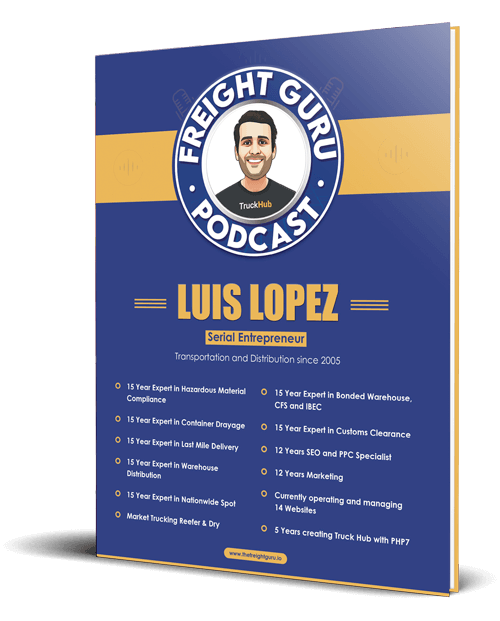
About the author: Luis Lopez is a Miami-based AI transportation consultant and logistics entrepreneur, the CEO of Go Hub.io Holdings Corp and subsidiaries, and host of the Freight Guru Podcast.