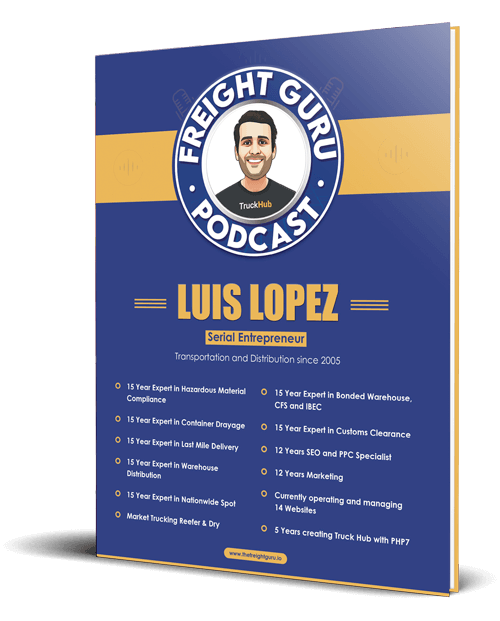
By Luis Lopez, founder of Freight Hub Corp and host of the Freight Guru Podcast
“The carrier has insurance, so we are covered.” I have heard that sentence from shippers more times than I can count, usually right before they find out it is not true.
Carrier liability and cargo insurance are two different things. Confusing them is one of the most common reasons a damaged shipment turns into an unpaid claim, and sometimes into a lawsuit. Here is the difference, in plain English.
Carrier Liability: What the Carrier Owes You by Law
When a motor carrier hauls your freight across state lines, federal law makes it liable for loss or damage. That is the Carmack Amendment. But “liable” comes with limits:
- The carrier has defenses. Acts of God, shipper packaging or loading errors, and the inherent nature of the goods can all defeat a claim.
- Liability can be capped. LTL tariffs often limit liability to a few dollars per pound, sometimes less for used or hard-to-value goods. Contract rates may carry their own caps.
- You have to prove it and file on time. Clean paperwork at pickup, exceptions at delivery, and a written claim within the deadline.
Carrier liability is a legal obligation, not an insurance policy that names you.
The Carrier’s Cargo Policy: Protection for the Carrier
Most truckload carriers carry a motor truck cargo policy, commonly $100,000 per load, because brokers and shippers require it. Two facts surprise people:
- It is generally not federally required. For most general freight, FMCSA does not require a carrier to carry cargo insurance at all. The filing requirement today applies mainly to household goods carriers. Cargo coverage on a general freight carrier exists because the market demands it.
- It pays on the carrier’s behalf, subject to the policy’s exclusions. If the loss falls into an exclusion, the insurer does not pay, and you are left collecting from the carrier directly.
Common exclusions and conditions to look for:
- Theft from an unattended or unsecured vehicle
- Refrigeration breakdown, unless reefer coverage was added
- Specific commodities such as electronics, alcohol, tobacco, pharmaceuticals or copper
- Vehicles or drivers not listed on the policy
- Wetting, rust, or temperature damage without a covered cause
A certificate of insurance shows that a policy exists and what the limit is. It does not show the exclusions.
Shipper’s Cargo Insurance: Protection for You
Shipper’s interest or all-risk cargo insurance is a policy the cargo owner buys for its own freight. It works differently:
- It pays you based on the insured value of the goods, without your having to prove the carrier was at fault.
- It typically pays faster, often within weeks rather than the months a carrier claim can take.
- It covers the gap between the freight’s value and the carrier’s liability limit.
- After paying you, the insurer pursues the carrier itself. That is called subrogation, and it is no longer your problem.
Policies can be bought per shipment or on an annual basis. Cost depends on the commodity, value, lane and mode, and it is usually a small fraction of the freight’s value.
A Simple Example
Say you ship 2,000 pounds of electronics worth $60,000 by LTL, and the carrier’s tariff limits liability to $5 per pound. If the shipment is destroyed and the carrier accepts the claim, the most you recover from the carrier is $10,000. The other $50,000 is your loss unless you declared a higher value and paid for it, or carried your own cargo policy.
The numbers change by carrier and commodity. The gap does not.
When Shippers Should Buy Their Own Coverage
- High-value freight worth more than the carrier’s limit of liability
- LTL shipments, where per-pound limits are low and handling is frequent
- Temperature-controlled freight, where reefer exclusions are common
- International and intermodal moves, where ocean and air liability limits are far lower than trucking limits
- Any shipment you could not afford to lose while a claim is pending
Questions to Ask Before the Load Moves
- What is the carrier’s limit of liability on this shipment, in dollars?
- Does the carrier’s cargo policy exclude my commodity?
- Is reefer breakdown covered, if temperature matters?
- Is the truck that shows up actually listed on the policy?
- If I use a broker, does it carry contingent cargo coverage, and what does that policy require?
Brokers should ask the same questions on behalf of their customers. Contingent cargo policies help, but they generally respond only after the carrier’s own coverage has denied or failed, and they have conditions of their own.
The Bottom Line
Carrier liability is what the law says the carrier owes. The carrier’s cargo policy protects the carrier. Only your own cargo insurance is written to protect you. Know which one you are relying on before the truck leaves the dock.
If a loss does happen, start with how to file a freight claim that actually gets paid, and for the wider picture see the most common freight lawsuits.
About the author: Luis Lopez is a Miami-based logistics entrepreneur, the founder of Freight Hub Corp, and host of the Freight Guru Podcast.
This article is general information for the freight community, not legal advice. Talk to a transportation attorney about your specific situation.