By Luis Lopez, AI transportation consultant, CEO of Go Hub.io Holdings Corp and subsidiaries, and host of the Freight Guru Podcast
Cargo theft used to mean a trailer stolen from a truck stop. That still happens, but more loads are now taken through deception: a criminal poses as a legitimate carrier or broker, picks up the freight with real-looking paperwork, and disappears. When a load is stolen either way, the same question follows. Who pays?
The answer depends on who had the freight, what the contracts say, and what the insurance policies exclude.
How Loads Get Stolen
- Straight theft. A loaded trailer or the whole truck is taken while parked and unattended.
- Pilferage. Part of the load is removed, sometimes without breaking the seal in an obvious way.
- Fictitious pickup. Someone with false credentials shows up at the shipper and is loaded.
- Identity theft. Criminals use a real carrier’s name and authority, with their own phone number and email, to book a load.
- Double brokering schemes. A load is accepted and handed off to an unsuspecting carrier, then diverted. I covered that in the most common freight lawsuits.
The Carrier’s Liability
For interstate shipments, the motor carrier that accepts the freight is generally liable for its loss under the Carmack Amendment. Theft by a third party is not one of the traditional defenses. If the load was stolen while in the carrier’s possession, the carrier usually owes the shipper for it, up to any limit of liability the shipper agreed to.
That last point matters. Many rate agreements and tariffs cap the carrier’s liability at a set amount per load or per pound. A shipper moving high-value goods under a low cap may recover only a fraction of the loss from the carrier.
When the “Carrier” Was a Thief
In a fictitious pickup, the freight was never tendered to the real carrier whose name was used. That carrier generally is not liable for a load it never agreed to haul and never possessed. The loss then falls back on whoever released the freight and whoever selected the imposter. These cases often turn on:
- What the shipper did to verify the driver and truck at pickup.
- What the broker did to vet the carrier before tendering the load.
- What the contracts between shipper and broker say about responsibility for cargo.
The Broker’s Liability
A broker arranges transportation and is generally not liable under Carmack. A broker can still be responsible in several ways:
- By contract. Many shipper-broker agreements make the broker liable for cargo loss regardless of fault.
- By acting like a carrier. A broker that holds itself out as the party hauling the freight may be treated as one.
- Through negligence claims for failing to use reasonable care in selecting the carrier. Courts have disagreed about how far federal law limits these claims.
Where Insurance Fails to Respond
A certificate showing cargo coverage does not mean a theft claim will be paid. Common problems include:
- Unattended vehicle exclusions. Many policies do not cover theft from a truck left unattended unless it was in a secured location.
- Commodity exclusions. Electronics, alcohol, tobacco, pharmaceuticals and metals are often excluded or sublimited.
- Voluntary parting or dishonesty exclusions. If the freight was handed over willingly to someone who turned out to be a thief, some policies will not pay.
- Unlisted vehicles or drivers. Coverage may apply only to equipment scheduled on the policy.
- Contingent cargo conditions. A broker’s contingent policy usually responds only after the carrier’s coverage fails, and has its own requirements.
The only policy written to protect the cargo owner directly is the owner’s own. I explained the difference in cargo insurance vs. carrier liability.
Reducing the Risk
Shippers
- Verify the driver’s identity, the truck and trailer numbers, and the carrier name against the dispatch information before loading.
- Do not release freight to a carrier different from the one named, without confirming with your broker or carrier contact.
- Use seals, record the numbers, and photograph the loaded trailer.
- Insure high-value freight for its full value.
Brokers
- Confirm authority, insurance and contact details through official records, and call back on the registered number.
- Watch for recent changes to phone numbers, emails or addresses, and for newly reactivated authorities.
- Require tracking, and investigate when it does not match the route.
Carriers
- Do not leave loaded trailers unattended in unsecured locations, especially in the first hours after pickup.
- Use locks and tracking devices on high-value loads.
- Protect your own identity: monitor your federal registration records and report unauthorized changes immediately.
- Know what your cargo policy excludes before you accept a load.
If a Load Is Stolen
- Report it to law enforcement immediately and get a report number.
- Notify your insurer, the broker and the shipper the same day.
- Preserve everything: rate confirmation, bill of lading, emails, phone numbers, tracking data, photos.
- File a written cargo claim within the deadline. See how to file a freight claim.
The Bottom Line
When cargo is stolen, liability follows possession and contract, and insurance follows the fine print. Most of the protection comes from steps taken before the truck is loaded: verify who you are dealing with, know the liability limit, and insure the freight for what it is worth.
For more on managing risk in freight, subscribe to the Freight Guru Podcast.
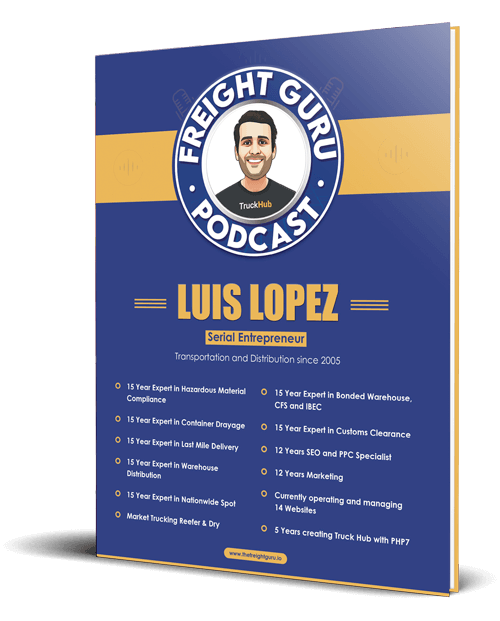
About the author: Luis Lopez is a Miami-based AI transportation consultant and logistics entrepreneur, the CEO of Go Hub.io Holdings Corp and subsidiaries, and host of the Freight Guru Podcast.
This article is general information for the freight community, not legal advice. Talk to a transportation attorney about your specific situation.