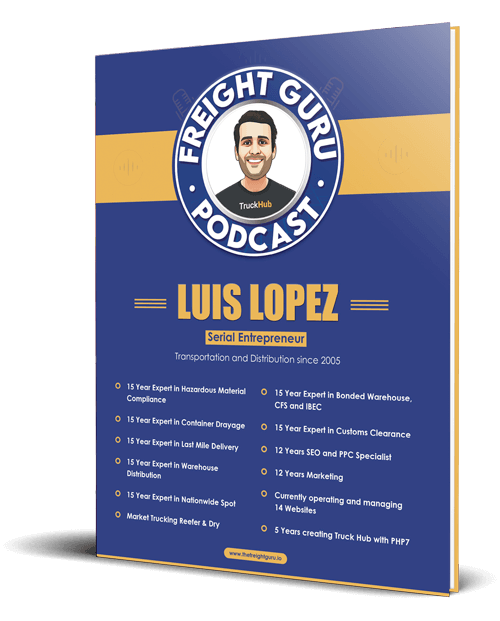
By Luis Lopez, AI transportation consultant, CEO of Go Hub.io Holdings Corp and subsidiaries, and host of the Freight Guru Podcast
Shippers, new logistics entrepreneurs and even some carriers use the terms interchangeably, but a freight forwarder and a freight broker are not the same thing. They have different legal roles, different liability, different regulatory requirements and different strengths. Choosing the wrong one can mean paying too much, shipping with the wrong partner or accepting more legal risk than you realized. Here is how to tell them apart.
The Short Answer
A freight broker arranges transportation between a shipper and a carrier, usually domestic trucking, without taking possession of the freight or operating the trucks. A freight forwarder organizes shipments, often international, and may take on the role of a carrier by issuing its own bill of lading, consolidating cargo, handling customs documents and managing the whole journey from origin to destination.
What a Freight Broker Does
A broker is an intermediary. The shipper has a load, the carrier has a truck, and the broker connects them and manages the transaction. Typical broker responsibilities include:
- Quoting rates and finding capacity for truckload, LTL, flatbed, reefer and other modes.
- Vetting carriers for authority, insurance and safety records.
- Tracking loads and communicating exceptions.
- Invoicing the shipper and paying the carrier.
In the United States, brokers must hold federal operating authority and a surety bond or trust fund. See freight broker bond (BMC-84) cost and requirements and our step-by-step guide to becoming a freight broker.
What a Freight Forwarder Does
A forwarder coordinates the movement of goods across the supply chain, with a particular strength in international shipping. Forwarders often:
- Book space on ocean, air, rail and truck carriers.
- Consolidate smaller shipments into containers or pallets, such as LCL ocean freight. Read FCL vs. LCL for more.
- Prepare export and import documentation and coordinate with customs brokers.
- Arrange cargo insurance, warehousing and last-mile delivery.
- Advise on Incoterms and transit planning. See our explanation of Incoterms 2020.
Forwarders may be non-vessel-operating common carriers (NVOCCs) or indirect air carriers, depending on the mode. Those roles come with their own licensing, bonding and tariff requirements, and with greater legal responsibility for the cargo.
Side-by-Side Comparison
- Primary focus: Brokers focus on matching freight to carriers. Forwarders manage end-to-end shipments, especially international.
- Modes: Brokers mostly handle trucking. Forwarders handle ocean, air, rail and truck.
- Documentation: Brokers manage load paperwork. Forwarders handle commercial invoices, export filings, bills of lading and customs coordination.
- Liability: Brokers generally are not carriers, though courts sometimes examine how a broker presented itself. Forwarders acting as principal or NVOCC may be liable for the cargo like a carrier. Learn the framework in our Carmack Amendment guide.
- Pricing: Brokers earn the spread between shipper rate and carrier cost. Forwarders may mark up their rates and charge separate fees for documentation, handling and other services.
- Typical customers: Brokers serve shippers who need domestic truck capacity. Forwarders serve importers and exporters who need a partner to manage a cross-border or multi-leg move.
When to Choose a Freight Broker
- You ship domestic full truckload or LTL freight and want competitive rates and flexible capacity.
- You need help finding carriers for specialized equipment or surge volume.
- You want a single point of contact for several carriers without hiring your own transportation team.
- You have a dependable routine and need a partner for overflow or backup.
When to Choose a Freight Forwarder
- You import or export and want one partner managing the route, paperwork and carriers.
- You ship less than a container and want consolidation.
- You need customs coordination, bonded or FTZ options, or warehousing at origin and destination. Compare FTZ vs. bonded warehouse.
- You want help with trade compliance questions and documentation accuracy. Recent changes such as the end of the de minimis exemption make good advice more valuable.
Where They Overlap
Many companies do both. A large logistics provider might broker domestic trucking, forward international shipments and offer warehousing under one roof. This is common, and it makes the labels confusing. Instead of relying on the name, ask which services the company will perform on your shipment, which entity issues the bill of lading and who is responsible if something goes wrong. See what a bill of lading establishes.
Questions to Ask Any Provider
- Are you acting as a broker, a forwarder, a carrier or all three on this shipment?
- What licenses and bonds do you hold, and can I verify them?
- What insurance covers my cargo and what are the limits and exclusions?
- How do you handle claims, delays and customs holds?
- What fees are included in the quote and what could be added later?
- Who is my main contact if something goes wrong at night or on a weekend?
Cost Considerations
A broker’s quote for domestic truckload is usually a single all-in number, plus any accessorials. A forwarder’s quote can include origin charges, main carriage, destination charges, customs, duties and handling. Compare quotes line by line, and watch for demurrage and detention exposure that can show up weeks later. Our guide on demurrage vs. detention explains how to avoid those surprises.
Bottom Line
Use a broker when your main need is domestic trucking capacity, and a forwarder when you need an international shipment managed from door to door. If your freight spans both, consider a provider that can handle each part and is transparent about its role. Clear roles mean clear accountability.
Want more clear-eyed freight explainers? Subscribe to The Freight Guru podcast, including our freight forwarding 101 conversation.
About the author: Luis Lopez is a Miami-based AI transportation consultant and logistics entrepreneur, the CEO of Go Hub.io Holdings Corp and subsidiaries, and host of the Freight Guru Podcast.