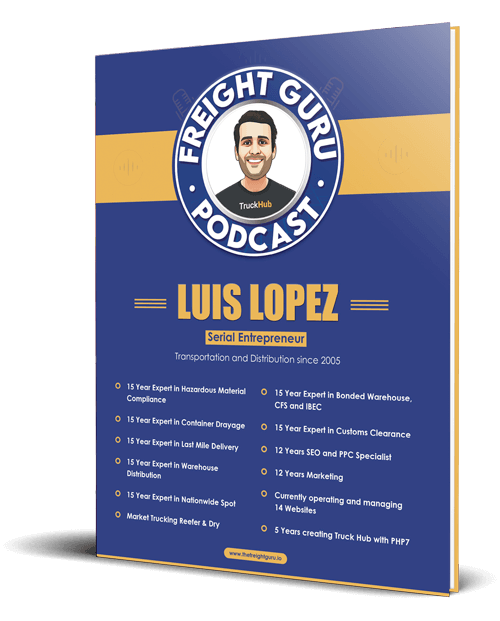
By Luis Lopez, AI transportation consultant, CEO of Go Hub.io Holdings Corp and subsidiaries, and host of the Freight Guru Podcast
Most shippers do not pick between full truckload and LTL once. They pick again every time a shipment grows or shrinks, and the wrong choice usually shows up later as a damage claim, a missed delivery window or an invoice nobody expected. After years of moving freight in South Florida, I have found that the decision gets easier when you stop asking “which is cheaper” and start asking “what does this freight need.”
How full truckload works
Full truckload (FTL) means your freight has the trailer to itself, or you are paying for the trailer as if it did. The truck picks up at origin, drives to the destination, and does not stop to load or unload anyone else’s freight in between.
That single-shipper movement is the main advantage. There are fewer touches, fewer opportunities for damage, and a more predictable pickup and delivery window. You also control the loading and sealing process, which matters for high-value or sensitive product.
How LTL works
Less-than-truckload (LTL) means your shipment shares a trailer with freight from other shippers. The carrier picks up your pallets, takes them to a terminal, consolidates them with other freight, moves them to a destination terminal, and then delivers them on a final-mile route.
You pay for the space and weight your freight uses, not the whole trailer. That is why LTL makes sense for smaller shipments. The trade-off is handling. Your freight can be moved through a dock more than once, and the transit schedule depends on the carrier’s network, not just the distance on a map.
The factors that should drive the decision
Size and weight
This is the obvious starting point. A few pallets generally point to LTL. A trailer’s worth of freight points to truckload. The gray zone sits in between, where a larger LTL shipment can cost as much as a dedicated truck. When you are in that zone, get both quotes and compare them. If you want to understand that middle ground, read my breakdown of volume LTL vs. partial truckload.
Fragility and handling risk
Every time freight crosses a dock, there is a chance of damage. If your product is fragile, high-value, or poorly packaged, fewer touches is worth real money. A truckload shipment that arrives intact beats a cheaper LTL shipment that arrives crushed.
Time sensitivity
A truckload moves directly from origin to destination. LTL moves on the carrier’s network schedule. If you have a hard delivery appointment, a production line waiting on parts, or a retail window, direct service gives you more control. If the freight can wait, LTL’s schedule is usually acceptable.
Freight classification
LTL pricing depends heavily on how your freight is classified. A wrong class on the paperwork leads to reclassification and adjustments after delivery. Truckload pricing is generally built around lane, equipment and market conditions instead. If you ship LTL, make sure you understand freight class and NMFC classes before you tender the load.
Accessorials and delivery requirements
LTL deliveries to residences, job sites or locations without a dock often involve extra services such as liftgate or appointment scheduling. Those add charges. A truckload delivery to a dock-equipped facility usually avoids many of them, although detention can still apply if the truck waits too long. For the LTL side of this, see my guide to LTL accessorial charges and how to avoid them.
A simple way to decide
When a shipper asks me which mode to use, I walk through these questions in order:
- Is the freight large enough to fill most of a trailer by space or weight? If yes, price truckload.
- Is it small enough that a full trailer would be mostly empty air? If yes, price LTL.
- Is the freight fragile, high-value or hard to replace? If yes, lean toward fewer touches.
- Is there a firm delivery window? If yes, lean toward direct service.
- Does the delivery site need special equipment or services? If yes, check the accessorial list before you trust the base rate.
If you land in the middle on most of these, request both quotes and compare the full landed cost, not just the line-haul number.
Compare the total cost, not the headline rate
The quote you see first is rarely the whole bill. For LTL, look at the base rate, fuel, accessorials, and the chance of reclassification. For truckload, look at the line-haul, fuel, accessorials, and any detention or extra stop charges. Then add the cost of risk: what happens to your business if the freight is late or damaged?
A lot of the price movement you see comes from market conditions, not just your shipment. My article on what affects freight quotes for LTL and truckload walks through those drivers, and the freight market cycle explains why a lane that was cheap last year can be expensive this year.
Common mistakes
- Shipping LTL because it looks cheaper without checking the extras. Accessorials and reclassification can close the gap fast.
- Booking a full truck for freight that is barely over the LTL range. Sometimes consolidating or splitting shipments saves money.
- Ignoring packaging. Poor pallet building hurts you in either mode, and it hurts you more in LTL.
- Not confirming dock hours and equipment needs. Many delivery problems start with information the shipper never gave the carrier.
- Skipping the paperwork. A clear bill of lading with accurate piece counts and weights protects you if something goes wrong. See how to fill out a bill of lading.
Bottom line
Full truckload is about control: fewer touches, direct movement, and a dedicated trailer. LTL is about efficiency: you pay for the space you use and accept a shared network. Neither is better in general. The right choice depends on your freight, your timeline and your tolerance for risk.
Pick the mode that matches the freight, quote both when you are close to the line, and compare the full cost before you commit.
For more on freight and logistics, subscribe to the Freight Guru Podcast.
About the author: Luis Lopez is a Miami-based AI transportation consultant and logistics entrepreneur, the CEO of Go Hub.io Holdings Corp and subsidiaries, and host of the Freight Guru Podcast.