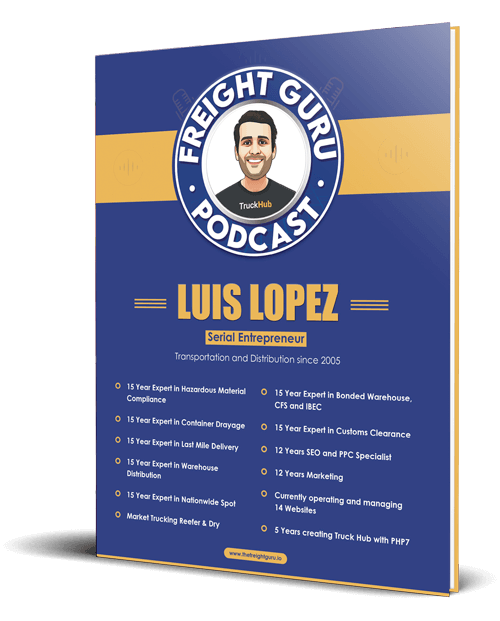
By Luis Lopez, AI transportation consultant, CEO of Go Hub.io Holdings Corp and subsidiaries, and host of the Freight Guru Podcast
A freight broker’s day is mostly reading, typing and re-typing. Rate requests come in by email. Load details get keyed into the TMS. Carriers get called, emailed and texted. Status updates get copied from one screen to another. Very little of that work requires a broker’s judgment, but all of it consumes a broker’s time.
That is the gap AI copilots are built for. A copilot is not an autonomous broker. It is software, usually built on a large language model, that sits inside the email inbox or the TMS, reads what the broker reads, and drafts the next step for a person to approve. Here are the ten tasks where that approach is practical right now, and what to watch for in each.
1. Triage the inbox
A copilot can read every incoming message and sort it: quote request, load tender, carrier offer, tracking question, invoice issue, or noise. It can pull the urgent items to the top and attach the related load. For a desk that receives hundreds of emails a day, simply not missing the tender buried under forty carrier blasts is a meaningful win.
2. Turn quote requests into structured data
Customers describe freight in free text: origin, destination, commodity, weight, dates and special requirements, in no particular order. A copilot can extract those fields, flag what is missing, and draft a reply asking for it. The broker stops retyping and starts reviewing.
3. Draft the quote
With the lane and equipment identified, the copilot can pull the company’s own history on that lane, current market benchmarks from whatever rate source the brokerage subscribes to, and the customer’s margin rules, then propose a price. The broker adjusts and sends. I went deeper on the pricing side in AI freight quoting and pricing.
4. Build the load
Once the customer accepts, the tender or email has everything needed to create the load record. Document extraction can populate the shipper, consignee, appointment windows, reference numbers and accessorials. The risk here is silent errors, such as a wrong ZIP code or a missed appointment note, so the copilot should show its confidence and highlight fields it was unsure about.
5. Shortlist carriers
A copilot can rank carriers for a load based on who has run the lane before, who performed well, who has a truck emptying nearby, and who is compliant. This is matching, not booking. It hands the rep a short call list instead of a load board search. See AI dispatch and load matching explained for how the matching logic works.
6. Write carrier outreach
Posting a load, emailing it to a preferred list and responding to the first round of carrier questions are repetitive. A copilot can draft and send the outreach, answer factual questions such as weight, commodity and appointment times from the load record, and escalate anything involving price or exceptions.
7. Prepare the rate confirmation
After the carrier is selected, the copilot can assemble the rate confirmation from the load record and the agreed rate, check it against the carrier’s packet, and queue it for signature. The value is consistency: every confirmation carries the same terms, and nothing agreed on the phone gets left out. For what belongs on that document, see what a rate confirmation is in trucking.
8. Handle check calls and status updates
Tracking updates are the classic low-value, high-volume task. A copilot can read ELD or app-based tracking data, send the customer a status message, and contact the driver or dispatcher only when the truck is off pace. Some tools do this by text or automated voice. The broker hears about the load only when there is a problem to solve.
9. Chase and check paperwork
After delivery, the copilot can request the proof of delivery, read it when it arrives, confirm the signature, date and piece count, and flag exceptions noted on the document. It can also compare the carrier’s invoice to the rate confirmation and identify accessorials that were never approved. That shortens the time from delivery to customer invoice.
10. Summarize accounts and exceptions
Before a customer call, a copilot can summarize the last month: loads moved, on-time performance, open claims, unpaid invoices and recurring issues at specific facilities. It can produce the same kind of summary for a carrier. This is work most brokers skip because it takes too long to assemble by hand.
What should stay with a person
Notice what is not on the list. A copilot should not, on its own:
- Commit to a price outside the rules the brokerage set for it.
- Approve a new carrier or override a compliance or fraud flag.
- Negotiate a claim or agree to a deduction.
- Deliver bad news to a customer without a human reviewing the message.
- Change payment or banking details for anyone.
These are the moments where an error costs real money or a relationship, and where accountability has to sit with a named person.
How to roll one out without breaking the desk
- Start with one task. Inbox triage or status updates are the usual starting points because mistakes are cheap and easy to spot.
- Keep a human approving every outbound message at first. Move to automatic sending only for message types where the draft has been accepted without edits for weeks.
- Clean up the data it depends on. A copilot that reads a carrier file full of outdated contacts will confidently email the wrong people.
- Measure before and after. Track loads per rep per day, response time on quotes, and the error rate on load entry. If those do not move, the tool is not working.
- Tell customers and carriers when they are dealing with automation. Most do not mind. Almost everyone minds finding out later.
What this means for brokerage jobs
The work that disappears first is the keying and the copying. The work that remains is the part customers actually pay for: knowing the market, solving the exception at two in the afternoon on a Friday, and being trusted by both sides of the load. Brokers who use a copilot well will handle more freight per person. Brokers whose main value was fast typing will feel the pressure.
If you are comparing products, the questions in how to evaluate an AI vendor for a trucking or logistics company are a good place to start.
For more on where technology is taking the brokerage desk, subscribe to the Freight Guru Podcast.
About the author: Luis Lopez is a Miami-based AI transportation consultant and logistics entrepreneur, the CEO of Go Hub.io Holdings Corp and subsidiaries, and host of the Freight Guru Podcast.