By Luis Lopez, AI transportation consultant, CEO of Go Hub.io Holdings Corp and subsidiaries, and host of the Freight Guru Podcast
Whenever AI comes up in trucking, the conversation jumps straight to driverless trucks and lost jobs. That is the wrong place to start. The first changes are showing up in the office, not the cab. Understanding AI and trucking jobs means looking at which tasks are repetitive and rule-based, because those are the tasks software handles first.
I cannot predict timelines or numbers, and I would distrust anyone who claims to. What I can do is describe where the pressure is likely to land first, based on how these tools work and what I see in the industry.
Think in tasks, not job titles
Most jobs are bundles of tasks. AI rarely replaces a whole job at once. It takes over some tasks inside it, and the job changes shape. A dispatcher, for example, does data entry, phone calls, problem solving and relationship management. Software can help with the first, assist on the second, and barely touches the last two.
The tasks most exposed share a few features: they are repetitive, they follow clear rules, they happen on a screen, and a wrong answer is easy to catch. The tasks least exposed involve physical presence, judgment under uncertainty, trust between people, or accountability when something goes wrong.
Roles that change first
Back-office and data entry
Typing information from documents into systems is the clearest early target. Reading paperwork, extracting details, and filling in records is work software does reasonably well, with a person checking exceptions. The role does not necessarily vanish, but it moves from typing to reviewing.
Customer service for routine questions
Status inquiries and document requests are repetitive and factual. Automated assistants can absorb a share of them. Staff who handle problems, disputes and relationships remain essential. See our look at AI chatbots for freight customer service for what works and what does not.
Dispatch and load planning
Software can suggest assignments, sequence stops and flag conflicts. That changes dispatch from building every plan by hand to checking and correcting proposed plans. The judgment calls, such as which customer gets priority or whether a driver can realistically make it, still sit with people. We cover this in AI dispatch and load matching explained.
Brokerage support tasks
Sourcing capacity, sending routine updates, checking in on loads and preparing quotes involve a lot of repeated steps. AI can draft and prepare much of it. Negotiation, carrier relationships and handling a load that goes wrong depend heavily on trust and experience. Our piece on the top 10 freight brokerage tasks for an AI copilot goes through the details.
Billing and paperwork reconciliation
Matching charges, documents and invoices is detail work. Software can flag mismatches and prepare packages. People still need to resolve disputes and decide what to do when the paperwork does not agree with what happened.
Roles that change more slowly
Drivers
Driving a truck through ports, warehouses, city streets and customer yards involves far more than steering. Drivers deal with security checks, paperwork, loading issues, equipment problems and people. Technology is already changing parts of the job, from safety alerts to navigation to electronic logs, and that will continue. Fully replacing a driver across all of freight is a much harder problem than most headlines suggest, and I will not pretend to know when or whether it happens for each type of work.
Mechanics and yard workers
Physical, varied, hands-on work is difficult to automate. Technology may help with diagnostics and scheduling, but the work itself still needs skilled people.
Warehouse handling
Some warehouse functions are more automatable than others, but mixed freight, irregular cargo and special handling keep a lot of work in human hands, especially in facilities that do not handle uniform products.
What workers can do now
- Learn the tools in your area. The person who understands how to supervise the software becomes more valuable than the one who ignores it.
- Move toward judgment and relationships. Problem solving, negotiation and customer trust are the hardest parts to replace.
- Understand your data. Knowing why a system gave a wrong answer is a real skill.
- Stay curious about safety and compliance. Rules and accountability keep people in the loop.
What owners can do now
- Be honest with your team. Explain what you are testing and why. Surprise breeds fear and resistance.
- Retrain before you replace. People who know your customers and operation are hard to rebuild. Moving them into review and exception handling often beats starting over.
- Start with the tasks people dislike. Repetitive entry and chasing updates are good first candidates, and staff are more open to help there.
- Measure the result. Check whether the tool improves accuracy and speed, not whether it merely exists.
- Keep humans accountable for decisions. Software suggests; a named person decides.
Smaller operations have their own considerations, covered in AI for small carriers and owner-operators.
The bottom line
AI will change trucking work unevenly. Repetitive desk tasks go first, judgment-heavy and physical work later, and nobody can honestly give you a date. The best preparation is practical: learn the tools, build skills in the parts of the job that need people, and push your employer to be open about what is coming. Companies that treat AI as a way to take drudgery off good people will likely do better than those that treat it as a headcount shortcut.
For more on freight and technology, subscribe to the Freight Guru Podcast.
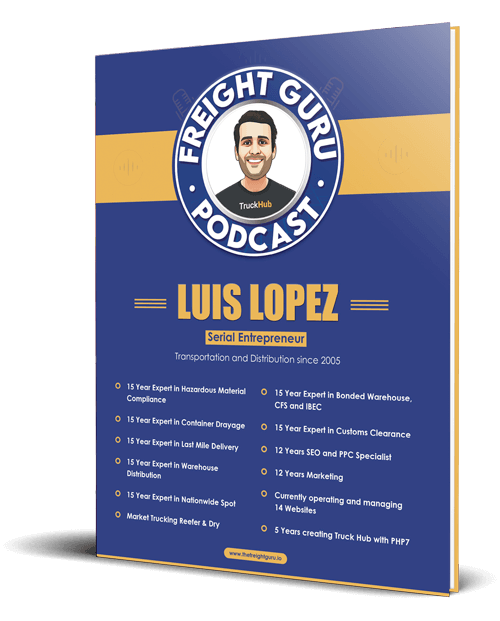
About the author: Luis Lopez is a Miami-based AI transportation consultant and logistics entrepreneur, the CEO of Go Hub.io Holdings Corp and subsidiaries, and host of the Freight Guru Podcast.